FR
Charles Clair
Airline pilot by training, entrepreneur, sole shareholder of the group.
“We don't like doing
things the way everyone else does”
From the cockpit to the helm of an international group
During a discovery flight over the Mississippi, he briefly took the controls: his path was set. First flights at the Toussus-le-Noble flying club, then training at EPAG.
Captain at Darta in Le Bourget, he logged more than
4,000 flight hours before founding, in 2004, what would become Clair Group.
Twenty years later, he remains the group's president and sole shareholder — without fundraising or outside investors.
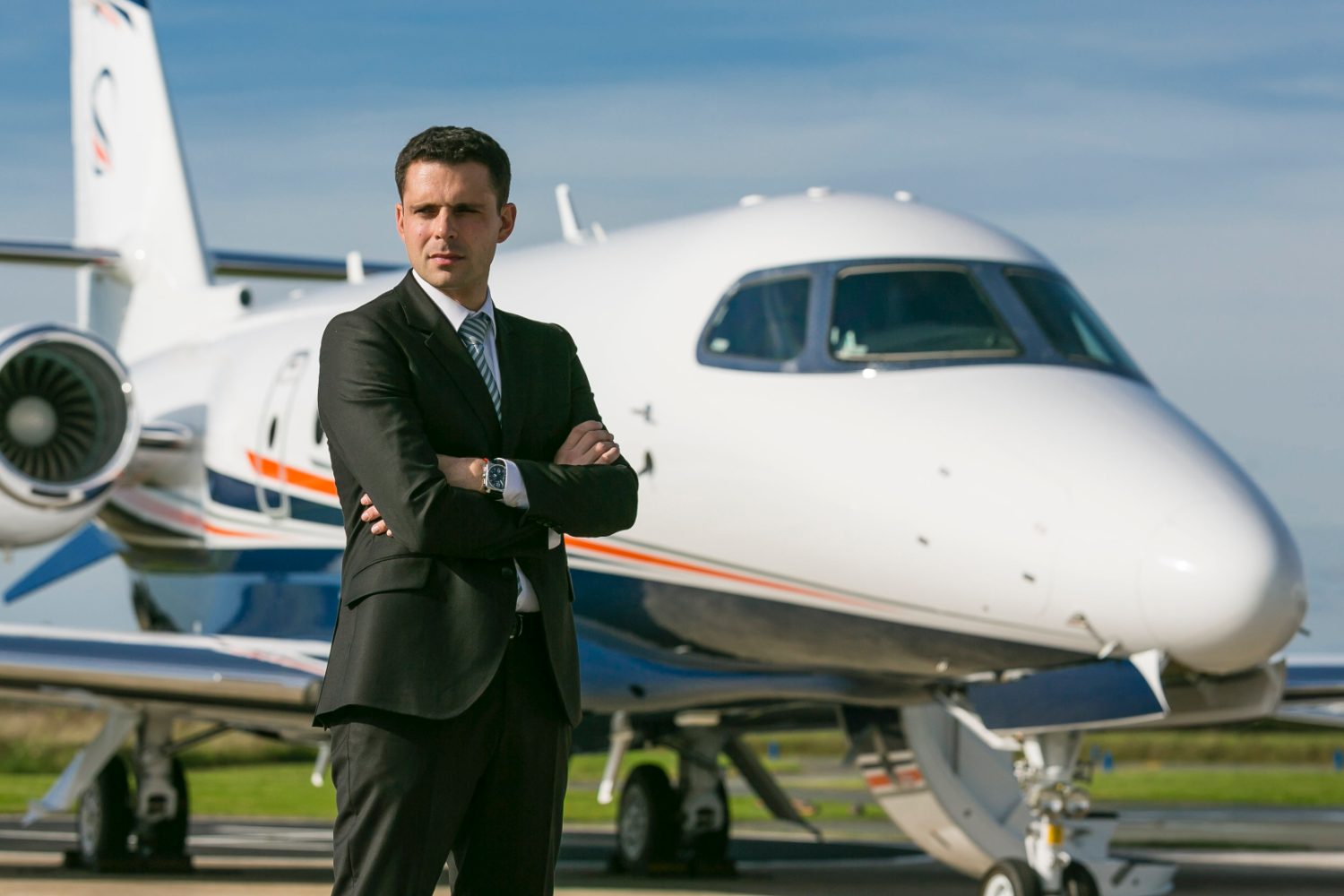
The group's history →Charles Clair is an airline pilot by training, an entrepreneur at heart and the group's sole shareholder. In the 2000s, his name began to circulate in the small circle of business aviation. His first business, founded with just 2,000 euros in his pocket, grew to generate 100 million in revenue. Today, he alone heads two airlines, the leading French flight school and an aircraft maintenance centre. Portrait of a man whose path is marked by boldness.
The journey of a child spoiled by his intuitions
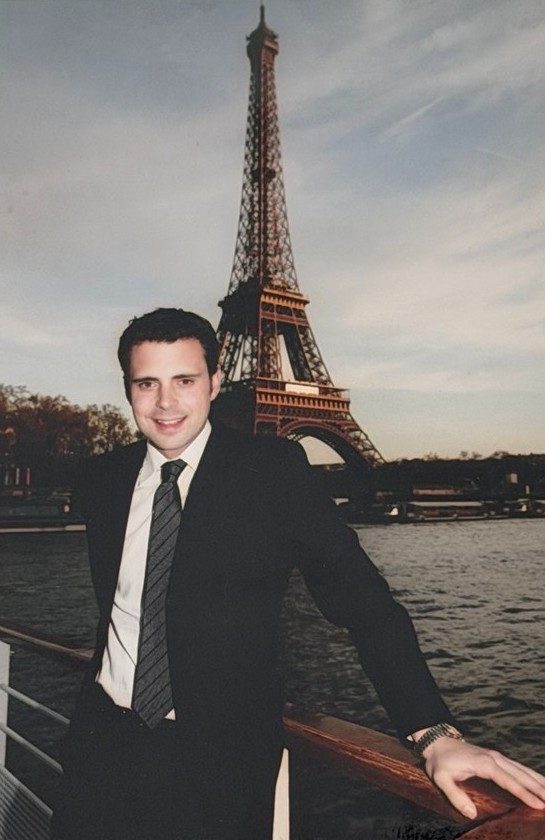
Nothing destined this son of a dental technician and a stay-at-home mother to become a pilot. A boss of pilots, perhaps more so… It was during a family holiday in the United States that Charles Clair heard the voices of aviation whisper his calling. During a seaplane discovery flight over the Mississippi, the pilot handed him the controls when he was only 15. “It was obvious, I wanted to become a pilot.” Beyond the appeal of the machine and of flying, the entrepreneur's profile was already there: “That day I understood that in life, you first set yourself a goal, then you chart the course to reach it. That's what aviation is.”
From light aircraft to the private Falcon
It was not yet time to convince customers. Charles first had to persuade his parents that he had found the right profession. At the end of the 1990s, airline pilot recruitment was far from buoyant. “Once I'd joined the flying club, I had to prove to them that it wasn't a teenage whim.” Proof came barely a year later: on his 16th birthday, Charles went solo on an Air France flying club aircraft at Toussus-le-Noble, in the Yvelines. Another sign of destiny, this aerodrome placed on his path… At 17, he earned his private pilot licence. But Charles still had to tame the aircraft. “I often came back pale and exhausted from my first flights!” After his baccalaureate, the first professional step in pilot training was the sacrosanct theoretical ATPL, which Charles took at the Institut Mermoz from September 2000. He passed all 14 exams on the first attempt and then joined EPAG, at the time a renowned flight school in northern France that trained the future crews of Air France.
On the job market in 2003, Charles sent hundreds of CVs to airlines. In vain: it was the height of the 9/11 crisis and the economy was at its lowest. Determined to stop relying on family money, Charles looked for a temporary job to tide him over until better days. He became a teaching assistant at the Institut Mermoz and invested his earnings in flight instructor training, with the idea of “building up his flight hours” and so appearing more attractive to potential employers.
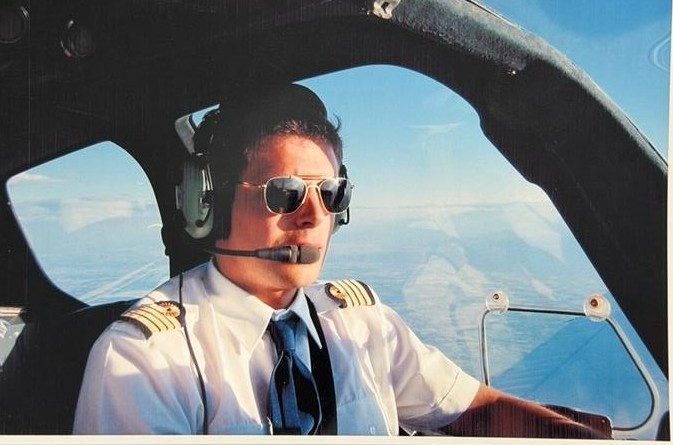
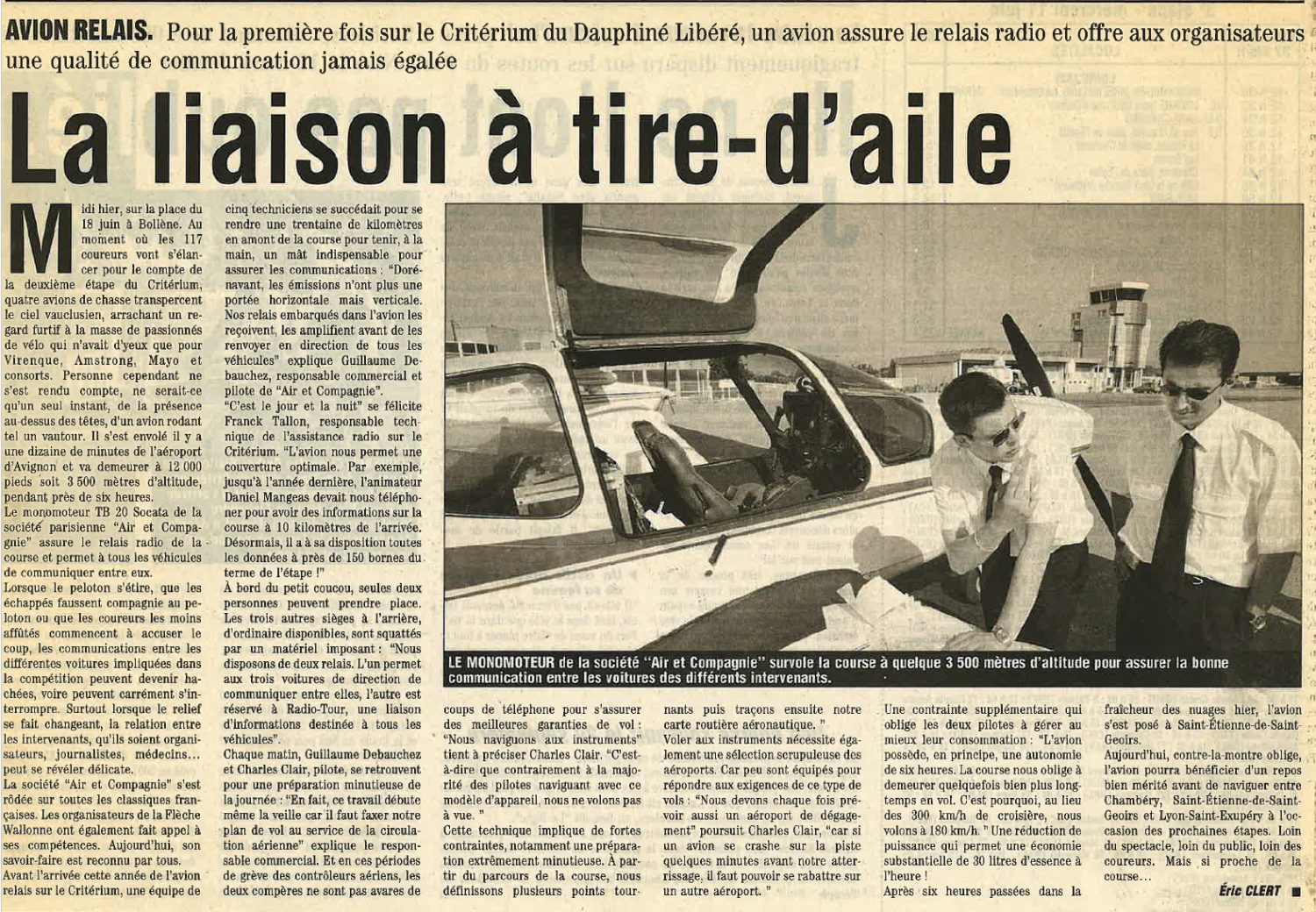
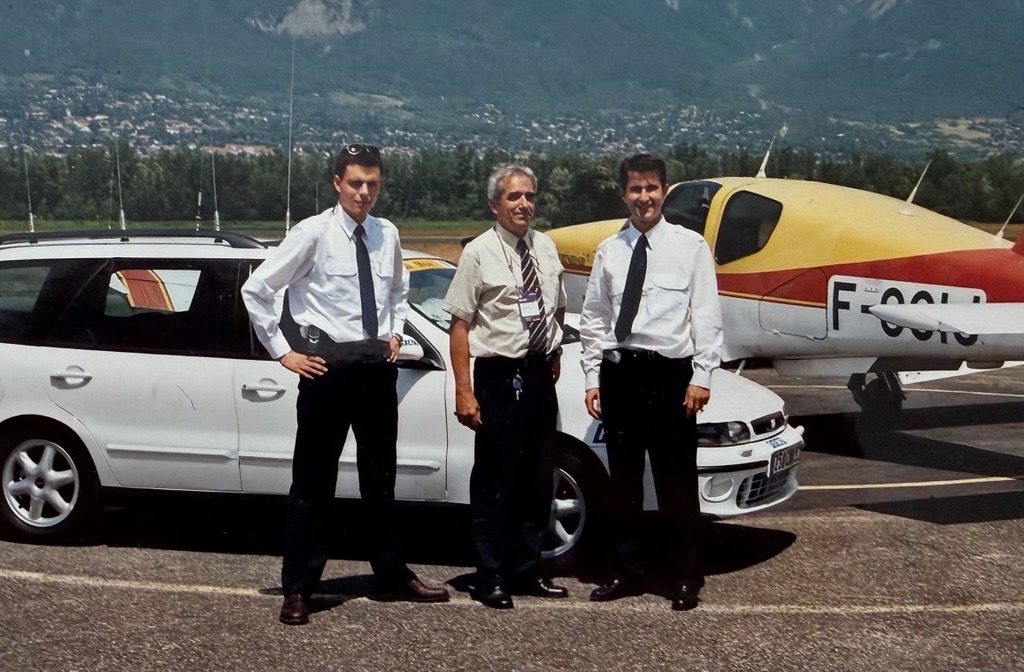
His very first job as a professional pilot was offered by the Boulogne-Billancourt flying club, at Saint-Cyr-l'École. A volunteer instructor on the Robin DR400, he was thrilled to put into practice the theory he passed on to his students through meticulous pre- and post-flight briefings. Too long for the club managers, who saw the fleet's flight hours fall since Charles arrived! “Do it well or don't do it, that's my motto.” From this first professional experience, Charles Clair understood that his obsession with work done well would only be satisfied within his own flight school. It would be called Air & Compagnie; the year was 2004 and success came quickly, with flying lessons “the Charles Clair way” fully booked. Charles also filled his logbook by flying radio relays for international cycling races on behalf of ASO, the Tour de France company.
“Do it well or don't do it, that's my motto.”
But the goal of the little boy flying over the Mississippi had not yet been reached. The shoulders of his shirt still bore no stripes… While developing his school, Charles continued his quest for an airline pilot job. It's all a question of route, he had told himself in the cockpit of that seaplane… he needed a different strategy…
Charles then turned to business aviation, while his classmates could only imagine the profession with a hundred passengers behind them. He approached DarTA, “Darnaudet Transport Aérien”, one of the pioneering operators at Le Bourget airport, famous for its family atmosphere but also for the gatekeeper at the entrance, a sales director who screened newcomers whatever the position they sought.
Certain that his CV would never reach the management's desk if he submitted it the usual way, Charles took a more original approach. He offered DarTA a partnership as a business introducer. It was the start of the great era of brokers, the intermediaries between clients and air operators. Charles landed a contract with DarTA. Now he had to find clients to keep the company's trust! Thanks to his contacts within the Tour de France organisation, he enabled DarTA to sell the Tour a first private flight to transport cyclists and VIPs, waiving his commission to snatch the deal from competing brokers. The aim was not to make money, but simply to meet Sylvie Darnaudet, who decided on pilot hiring at DarTA.
Charles dropped his mask in front of the company's director. “I admitted to her that I wasn't a salesman by trade at all, I simply wanted to become a pilot with them.” Faced with the candidate's boldness, and although DarTA was not recruiting at the time, Sylvie Darnaudet promised him he would be the next pilot hired. She also made a prediction that would soon come true: “We'll take you on as a pilot, but I predict you won't stay with us, you're not cut out to be aircrew…”
Charles used this new reprieve to perfect his English in the United Kingdom. “And then one day, while I was sitting in a Starbucks, I got a call from DarTA's chief pilot: you start Monday, on the Beechcraft 200!” Goal achieved. Time to set new ones.
While keeping up the demanding pace of a business jet pilot permanently on call, “on the pager”, Charles continued to develop Air & Compagnie. He adopted the work rhythm that has always remained his: “Apart from regulatory rest, I worked 7 days a week and travelled daily between Toussus and Le Bourget on my two-wheeler.” Scooter, impeccable suit, assured delivery: this was the business leader before us.
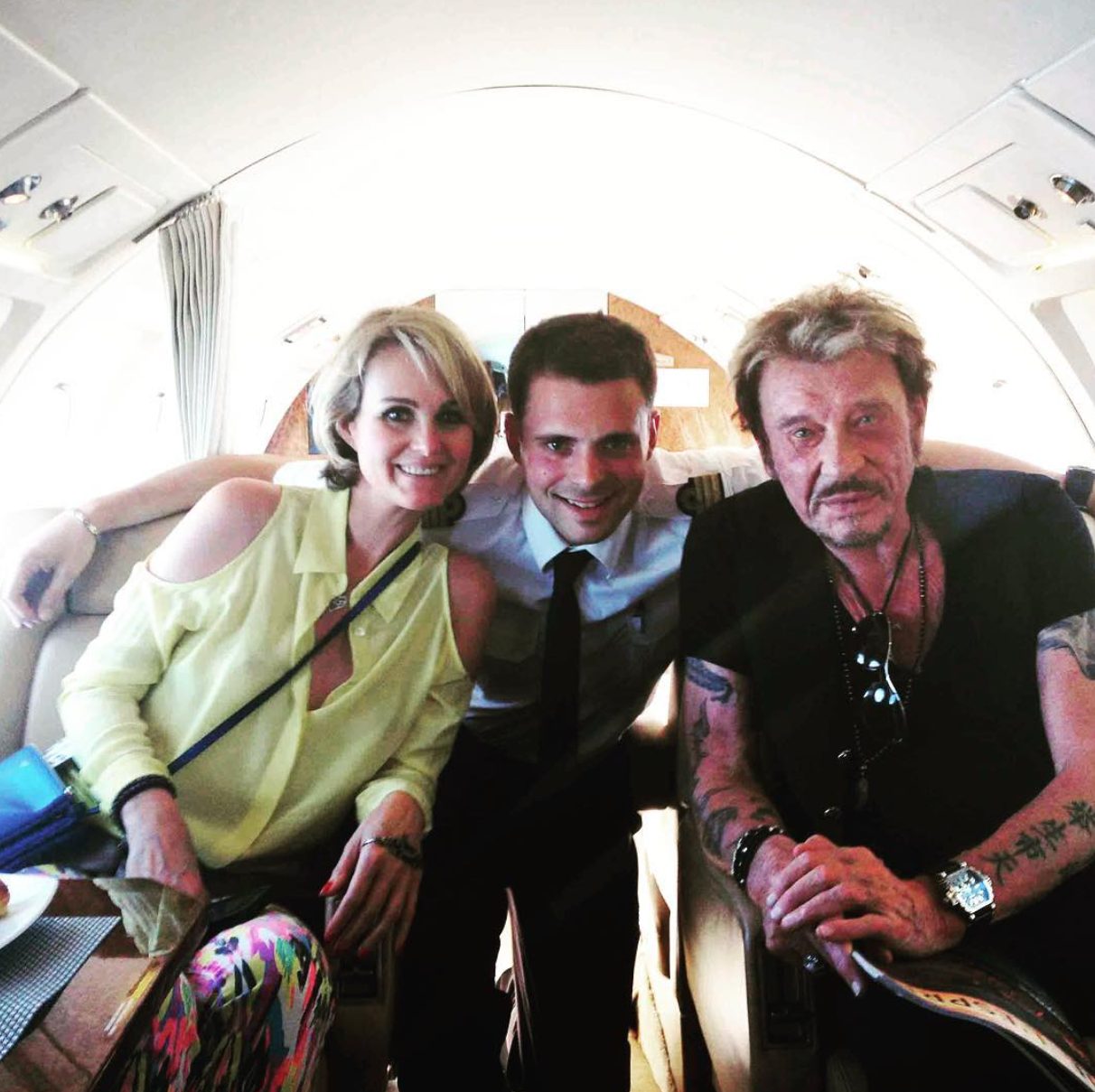
As Air & Compagnie passed the 3 million euro revenue mark, Charles Clair flew the Falcon 50 in 2009, then became deputy chief pilot at DarTA. He reformed the operations management system and added his own touch, exactly as he had tried to do with his first employer. “That's when I felt my passion for business taking over from my passion for flying.” One fine day, he told the Darnaudets, father and daughter: “The Beechcraft 200 is over, we need to move to Very Light Jets.” A few months later, the “VLJ” market exploded with the arrival of the Cessna Citation Mustang.
Charles persuaded an owner-pilot, whose private Mustang was based at DarTA, to place it in the company's public transport fleet to start the transition. He thus encouraged the Darnaudets to open a new flight sector, with a 10th aircraft type. Tasked with adding it to the fleet list with the French Civil Aviation Authority on behalf of DarTA, Charles Clair was refused. 10 different types was too many for this company.
Every pilot's dream: owning an airline
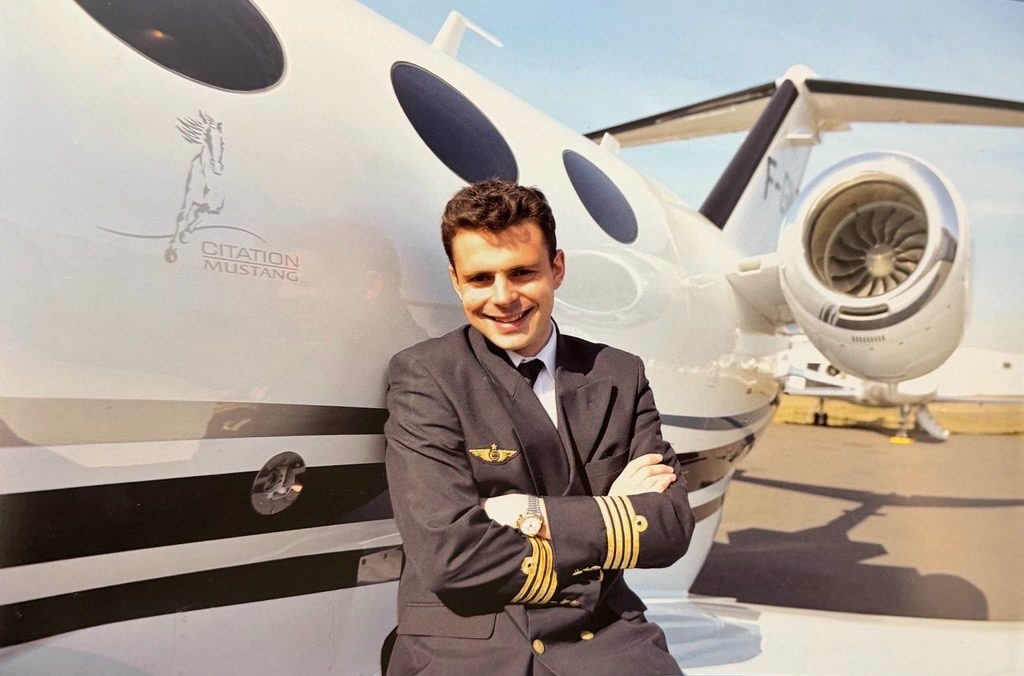
That was to reckon without his determination. “Since flying for DarTA, I had lived on my pilot's salary and hadn't touched my income from Air & Compagnie.” Once again, he had a proposal for the Darnaudets: “I'll invest my flight school's financial reserves to set up my own airline and operate this aircraft. But it will fly exclusively for DarTA. In return, you guarantee me 300 flight hours a year.” Deal done. The AOC (Air Operator Certificate) of the new airline Astonjet was registered in February 2012.
But a year later, DarTA came under the control of a competing business aviation group. It was a time of consolidation; the family business model that had made the company's success had had its day. At the same time, visions no longer aligned so well: Charles ended the exclusivity and set out to fly on his own wings. “For the first time, I would have to live off my company, without the security of my pilot's salary!” It was the big leap.
Charles got organised: holding company, maintenance workshop, one, two, three aircraft; he initially invested 400,000 euros in acquiring facilities at Toussus. A major CAC 40 business leader also entrusted him with his private jet. Charles once again showed his negotiating talents: “I had 15 minutes at that group's board meeting to convince them to buy a new aircraft. I'd rehearsed my pitch dozens of times; it lasted 17 minutes, and I got the aircraft.”
The group passed the 10 million revenue mark in 2014. Astonjet's fleet continued to grow and, in addition to the first Mustangs that formed it, added the American manufacturer's latest flagships such as the Citation M2 from 2016 and the Citation Latitude in 2017. “From 2019, we moved into long-haul with heavier, even higher-performance business jets.”
Charles Clair now had his own airline, Astonjet, founded in 2009; a flight school, Astonfly (formerly Air et Compagnie), born in 2004 and now France's leading ATO (Approved Training Organisation), with nearly 150 airline pilots trained each year and a fleet of some forty light single- and twin-engine aircraft; and Astontec, a maintenance workshop.
New real estate projects at the dawn of 2018
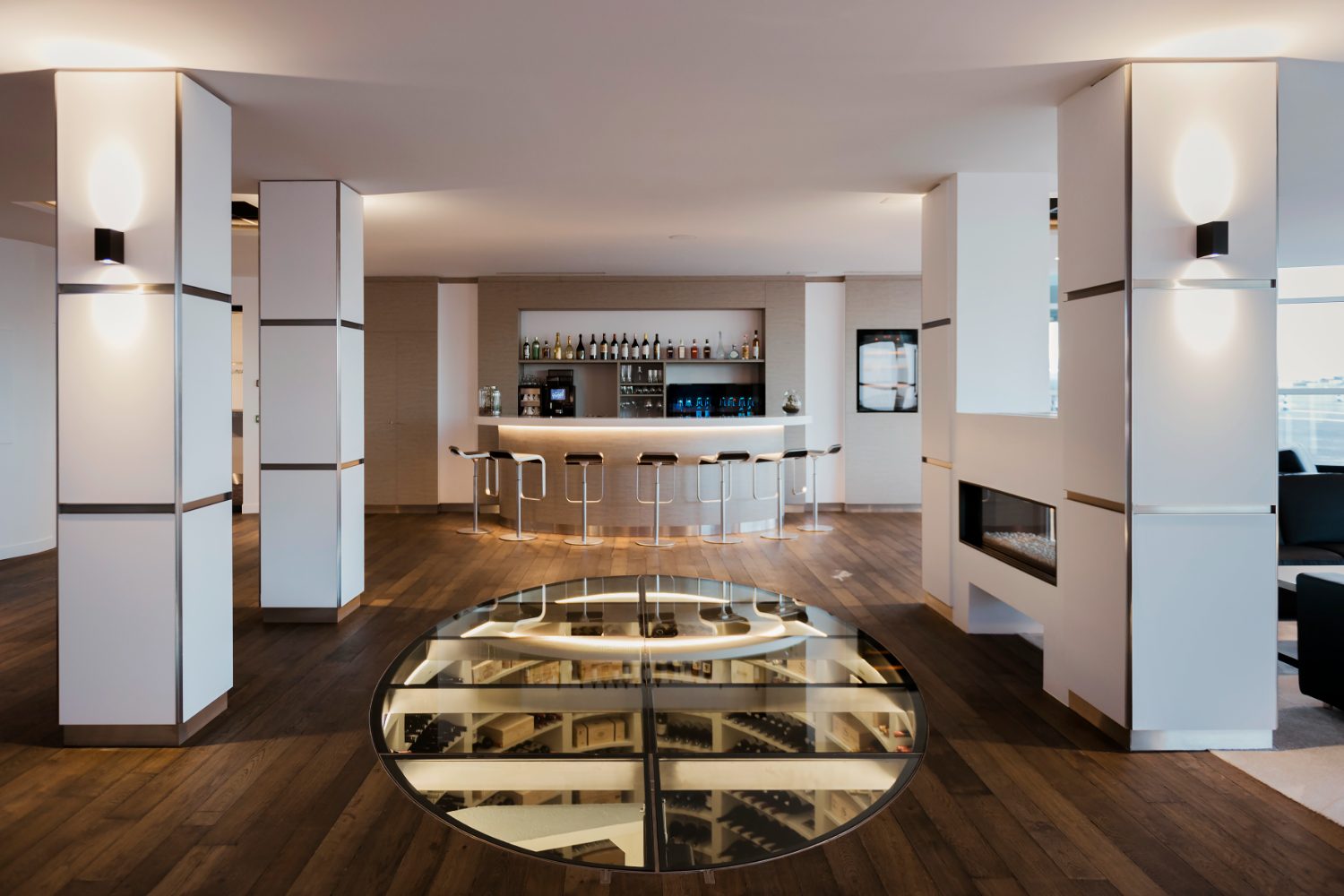
In 2019, Charles Clair invested 10 million euros in acquiring and renovating the largest terminal at Le Bourget airport. “At that time, owners of large aircraft, which were gradually joining our fleet, were no longer satisfied with being hosted in a third party's terminal. They wanted a complete service.”
Yet that was not – yet – the ambition when Charles Clair met the Signature Flight Support group (BBA), operator of three FBO (Fixed Base Operator) terminals at Le Bourget, in spring 2018. He came to enquire about renting a floor of Terminal 2, the northernmost at the airport. During the meeting, the idea became obvious: “What if I bought the whole building from you?” The British group wasn't even selling! Yet, swayed by Charles's arguments, it sold. “Three FBOs at Le Bourget was one too many, and I think they were reassured that I wasn't a direct competitor. All the other ground handling groups are owned by shareholders worth more than 500 million euros each, while my capital was only 500K!”
“What if I bought the whole building from you?”
This terminal, named Astonsky and renovated to five-star standards, has hosted the Astonjet fleet since September 2019, with 7,000 m² of offices, 2 hangars and 16,000 m² of aircraft parking. “We wanted to make Astonsky a reference in French luxury, dedicated to an ever more demanding clientele. We completely rethought the welcome and service offered to the passengers and crews who arrive with us.” South of Paris, the Toussus-le-Noble hub also grew with the acquisition of new aircraft and simulators.
A worldwide twist disrupted the launch of Astonsky just as the terminal began operations: covid grounded aircraft, apart from a few essential business flights and medical flights. These rare movements did not fill the coffers while costs did not fall. Swift action was needed. Charles Clair used his network to organise an air bridge between China and France to carry medical equipment by Boeing 747. This one-off but vital service generated a few tens of millions of euros in revenue, protecting the latest gem and all the companies forced to slow down.
Once the covid crisis was over, Astonsky became Le Bourget's flagship. Its ultra-luxury service, adapted from Parisian grand hotels, a true “tunnel” between car and aircraft, quickly won everyone over. Against the six historic FBOs, it ranked first, with 20% more movements than the second.
Sale of the Astonsky terminal to the world's third-largest defence group
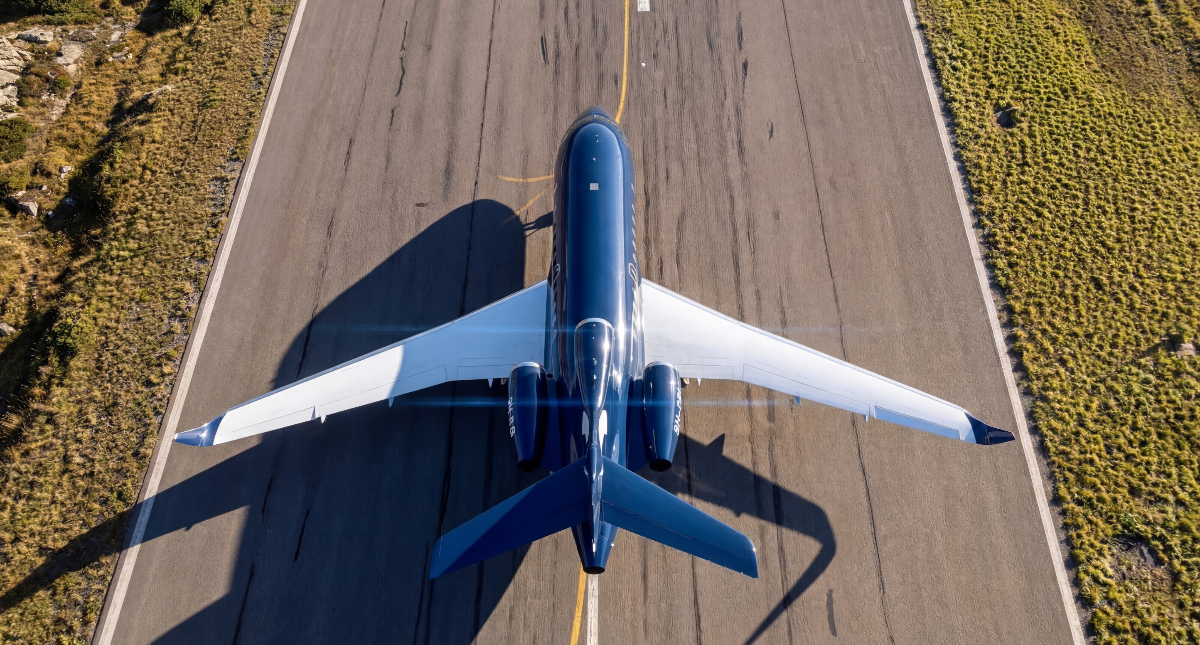
The aircraft handled occasionally or based year-round kept getting bigger. Services for pilots and passengers expanded. Infrastructure, especially aircraft parking, grew. Until it caught the attention of a business aviation heavyweight, Switzerland's Jet Aviation, part of the aerospace and defence group General Dynamics, which owns the manufacturer Gulfstream and generates more than 52 billion dollars in revenue. Jet Aviation saw Astonsky as the missing piece in its service offering and a way to establish a solid base in France.
Meanwhile, Clair Group's strategy had evolved to refocus on aircraft management around the globe. “I understood that our centre of gravity was shifting when we added a second Falcon 7X sold in Malaysia, to a client who had never come to Le Bourget and knew nothing of our handling business. The terminal added no value to that transaction.” It was time to sell. In summer 2025, the Astonsky brand was put on hold and the terminal's business taken over by Jet Aviation. Astonjet remains a tenant of a hangar and offices for its French division.
Second AOC for Astonjet and international expansion
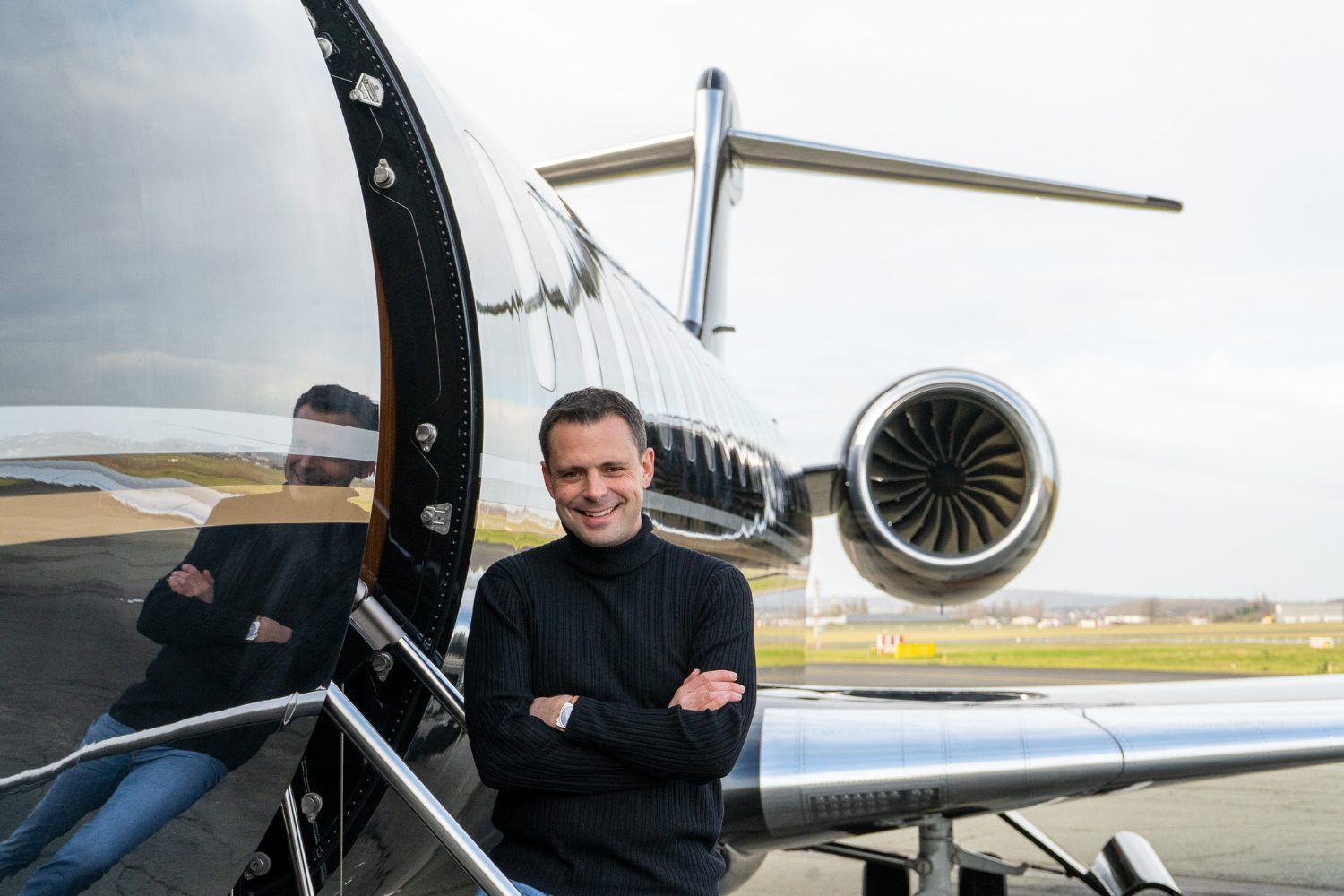
The sale of Astonsky gave Clair Group a reinvestment capacity of several tens of millions of euros. “We had reached the highest level of excellence. To grow further, we would have had to invest hundreds of millions in other FBOs on every continent…” An unnecessary risk, as Charles Clair saw growing demand for his aircraft management advice. The clients had to be followed. Clair Group opened an Astonjet office in Dubai at the end of 2025… a few weeks before the war in Iran. Yet another crisis in which Charles Clair once again had to show agility and resilience. End of the brief Dubai venture, and the course held: international development and fleet growth.
“Following the Malaysian operation, we added five long-haul aircraft. We went from 12 to more than 25 aircraft in a few months, placing us among the large operators, which, like us, own no aircraft. It's the most efficient business model in air operations.”
This growth, combined with the trust of an international clientele and the constraints of the French registry, led Charles Clair to create a second AOC (Air Operator Certificate): Astonjet Malta was born, with a local team of almost 80 employees, half of the group's workforce. A third of the fleet nevertheless remains under the Astonjet France flag, mainly for medical flights.
Astonfly spreads its wings
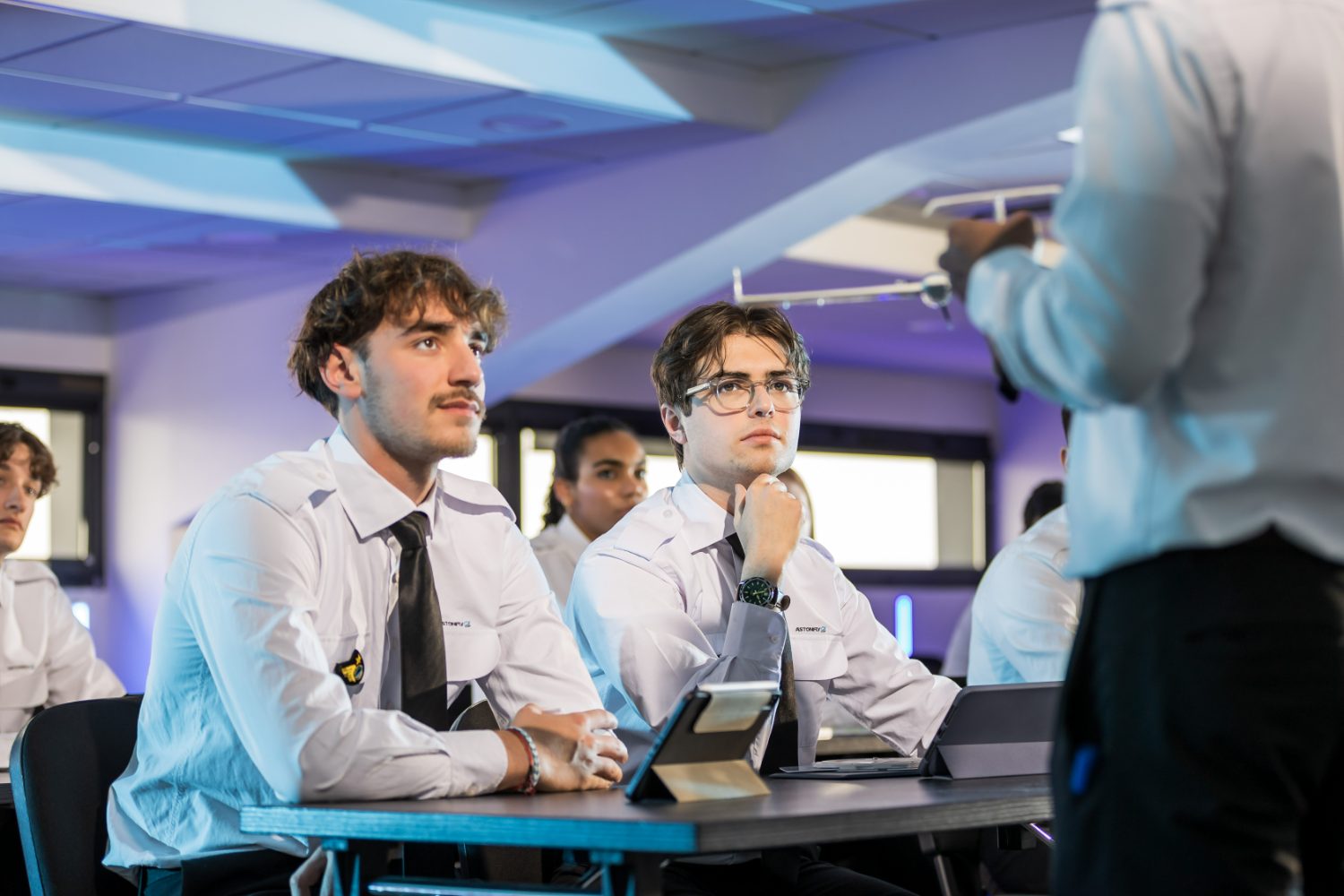
As Astonjet extends its reach, Astonfly, the group's original company, also continues to spread its wings. Now in Europe's top 3 training centres, the school “releases” 150 pilots a year. Since its creation, 2,000 pilots trained at Astonfly work for 50 airlines. Its success relies on the same recipe as the group's other entities: customer service. At Toussus, that means a single-type fleet (one single-engine and one twin-engine type), campus-style premises and a renowned teaching team. “We support each of our students individually, but our approach is industrial, and that's why it works particularly well.” Charles Clair wanted a simple model for this school: a single integrated course with two programmes, “multi airlines” or the “Ryanair Future Flyer Academy”, feeding the pilot pool of a partner that provides additional assurance of training quality.
Another strength of Astonfly is its sister company Astontec. As Clair Group's chessboard is played with complementary pieces, each supporting the others' progress, Astontec has become Astonfly's exclusive support service. “Our ten in-house mechanics and our stock of a million parts allow us to guarantee unrivalled aircraft availability.” That is how this small country school became France's number one and one of Europe's leaders, with nearly 20,000 flight hours a year.
From the skies to the open sea
With Clair Group's strategy refocused on asset management, its founder's next string to his bow became obvious. The same passion, the same clients, the same ways of operating, ultimately the same business… Charles Clair is about to announce the launch of a new Aston brand, under which a fleet of a very different kind from those of Astonfly and Astonjet will set sail… See you on the world's seas from 2027!
The other playing fields
And what about flying? “I keep my licences up to date and keep flying; it's important for the expertise I must maintain to advise my future owner clients. But I'm very probably the last pilot in the company to be rostered!” Indeed, when aircrew are short-staffed, they call the boss! “When I'm preparing my flight, I wonder what I'm doing there, the phone never stops ringing and you have to concentrate… Then you lock the door, start the engines, take off, retract the gear, and only then do I tell myself that this activity is exceptional and I enjoy the break from the ground.” For that reason at least, Charles will keep flying, to take a break! But Charles is not one to be satisfied with a single playing field. Type-rated and an instructor on Cessna Citation jets, he also flies a TBM turboprop and an Airbus H120 helicopter, making it easier to meet his clients in Europe and beyond.
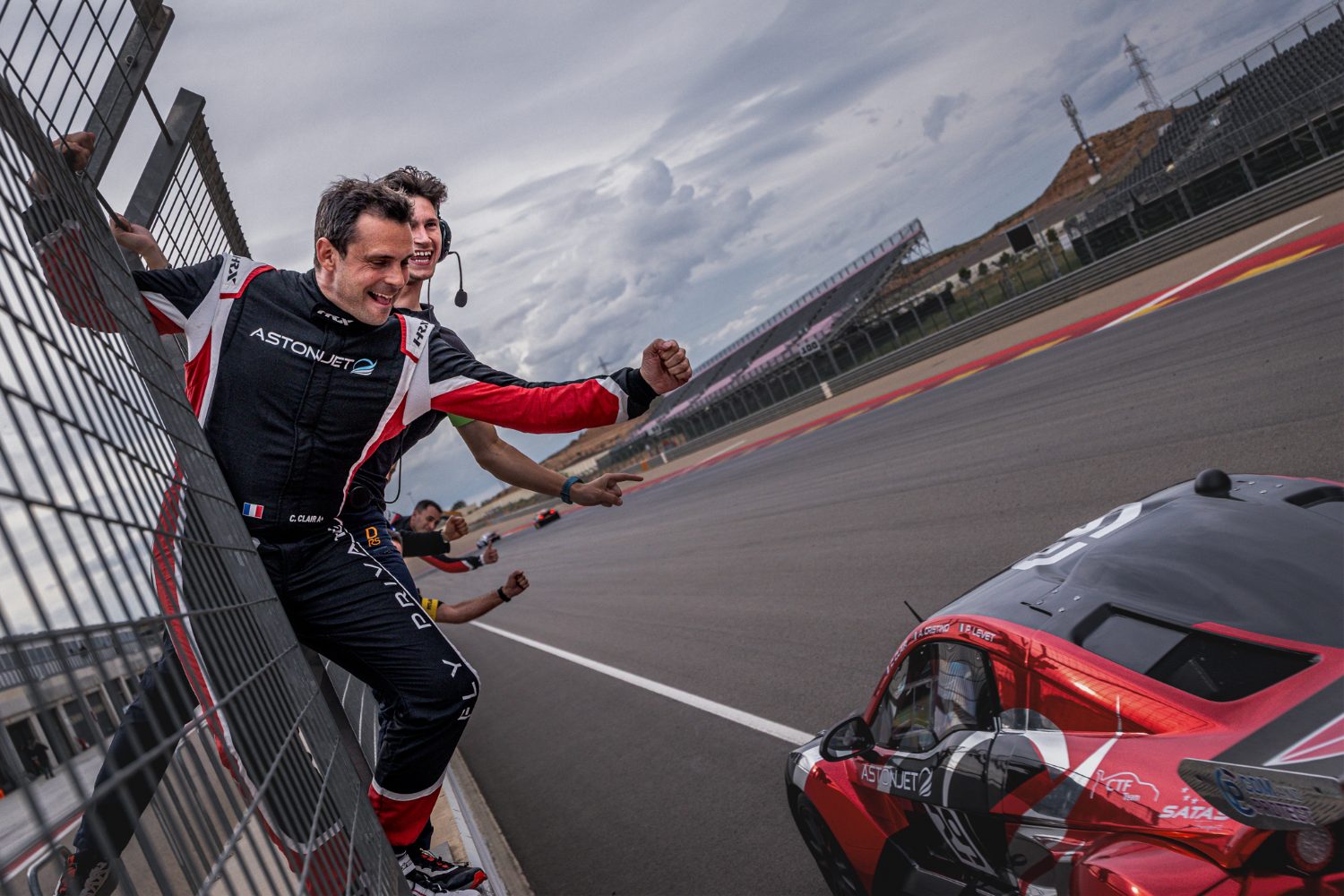
At ease in the third dimension, Charles Clair also races on land. A motorsport enthusiast, another world of rigour and another client network, he competes in endurance racing after many seasons in Formula 3. With his team, at the wheel of a Lamera prototype, he regularly takes the top step of the podium.
As for steering companies, Charles Clair dreams of running larger structures. “At every level of company, you learn: in a very small business you're operational, in an SME a manager, then in a mid-sized company a strategist… A company that doesn't grow goes backwards, you must never forget that.” Clair Group's development will therefore involve external growth within a few months. A change of scale that should turn heads. And by the way, why “Aston”? “Because the word Astonish means to amaze.” Surprising!
“A company that doesn't grow goes backwards, you must never forget that.”
Latest posts
 fly_charlie2 dRace One · Le Castellet
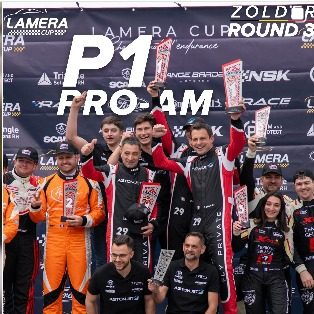 fly_charlie5 dP1 Pro-Am · Zolder, Race 2
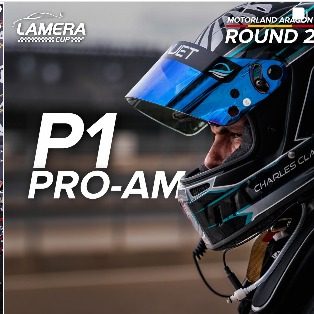 fly_charlie1 wkP1 Pro-Am · MotorLand Aragón
 fly_charlie2 wkFalcon 10X · Dassault Aviation
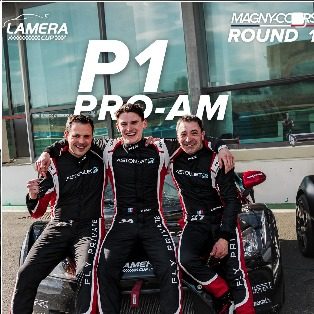 fly_charlie3 wkP1 Pro-Am · Magny-Cours
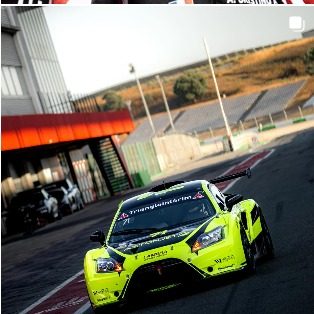 fly_charlie1 monthEndurance · Lamera Cup
fly_charlie2 dRace One · Le Castellet
fly_charlie5 dP1 Pro-Am · Zolder, Race 2
fly_charlie1 wkP1 Pro-Am · MotorLand Aragón
fly_charlie2 wkFalcon 10X · Dassault Aviation
fly_charlie3 wkP1 Pro-Am · Magny-Cours
fly_charlie1 monthEndurance · Lamera Cup
Cookie management
We use cookies necessary for the Clair Group site to function and, with your consent, Google Analytics audience measurement cookies to improve our content and browsing experience.
Cookie preferences
You can accept or refuse audience measurement cookies. Cookies strictly necessary for the site to function are always active.
Strictly necessary cookies
Essential for the site to function, they enable in particular page display, secure browsing and remembering your choices.
Audience measurement cookies
These Google Analytics cookies help us understand how the site is used in order to improve its content, usability and performance.
Turn your phone to landscape mode to read the article.